Repairs · Oshawa
Garage Door Perimeter Weatherstrip
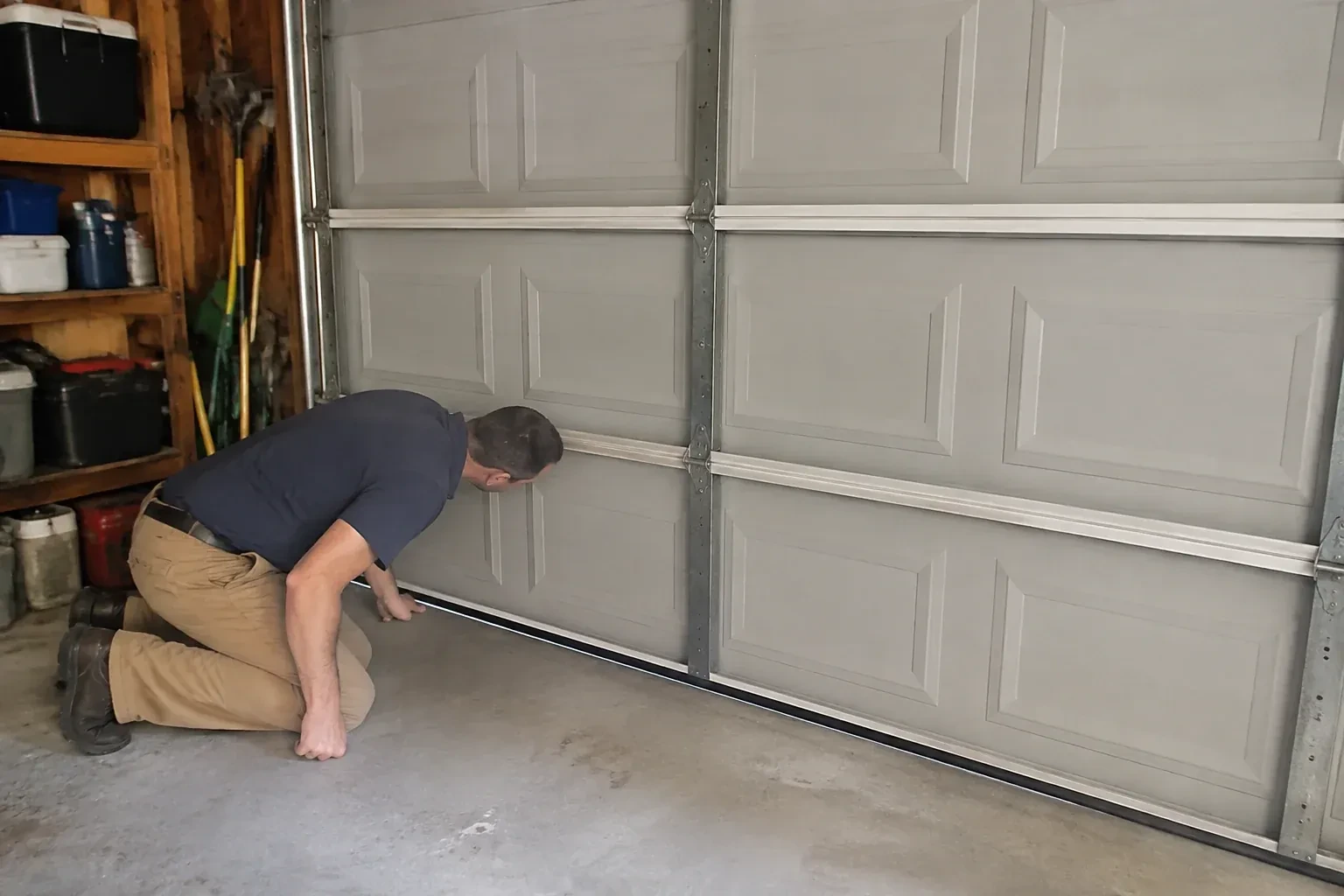
The new door went in last year and looks perfect, but the old wooden stop and its tired seal were left in place. Along the top there is a gap you could slide a finger into, and the cold pours through it.
Garage Door Perimeter Weatherstrip
In plain words
Around a garage door there are three seals: one on the bottom edge of the door, and two running up the sides and across the top of the opening. Those last two are the perimeter weatherstrip. They are fixed to the stop moulding on the jambs and header, and their flexible fin rests against the door face when it is closed, closing the gap between door and frame. Replacing them means fitting new lengths that meet the door evenly, cutting down how much wind, driven snow, dust, leaves and small animals get through. The bottom seal is handled as its own job, but the two are often done together.
How the visit goesThe bedroom over the garage is always the cold room, and standing in the garage you can feel why: a steady draft along the door edges that moves the cobwebs on the wall. The seal around the opening has flattened to nothing.
Oshawa
How the visit goes
What kind of seal is there now
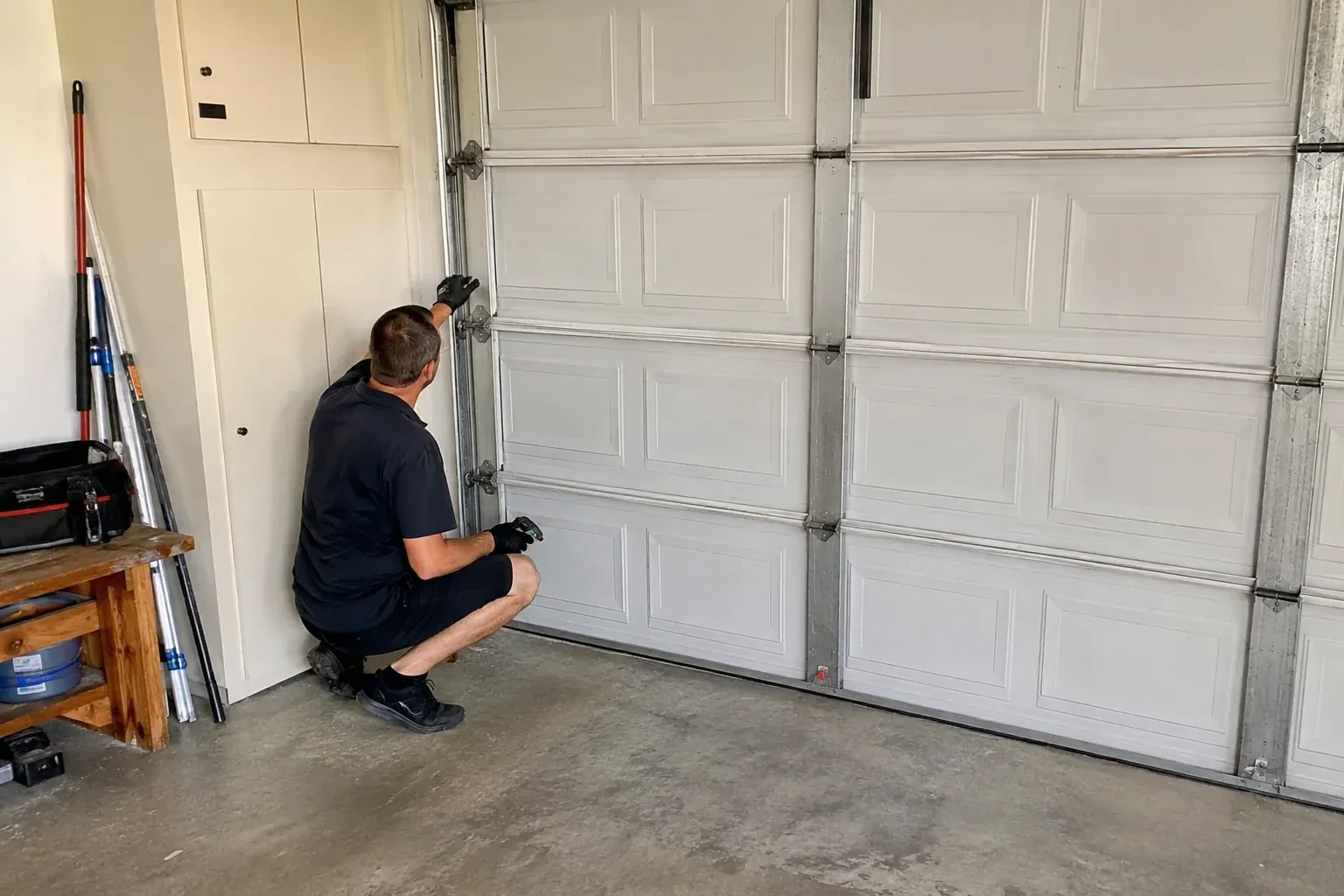
Openings carry different seals depending on their age and who last worked on them. Many older garages have a painted wood stop with a flexible vinyl fin nailed to its face. Newer installations often have a one-piece vinyl stop with the fin moulded in. Some commercial and premium doors use an aluminum retainer with a slide-in rubber insert, or a brush seal. The technician identifies which is present, whether the rigid part is sound enough to keep, and what the fastening was, because that decides whether a new fin goes onto the existing stop or the whole stop is replaced.
Replacing the wood stop with a one-piece vinyl stop
When the old wood stop is cracked, rotten or buried in paint, it is replaced rather than covered. The one-piece stop, a rigid vinyl moulding with the flexible fin formed along one edge, is cut on a mitre saw to header and side lengths and fitted the same way, header first. It needs no paint, does not rot, and its fin and stop are one part, so the seal cannot peel away from the moulding. Corners are either mitred or the sides butted tight under the header with the fins overlapped. The result looks like fresh trim and works as a seal.
Slush, salt and the bottom of the jambs
The lowest part of each jamb is where the weather does its work, so a little attention there protects the whole seal. Push slush away from the jambs when clearing the driveway rather than piling it against them, and rinse the salt off the bottom of the stop on a mild day. Keep the joint between the jamb and the sill caulked so meltwater runs off the face instead of behind it. If a section of jamb was replaced, keep its paint or PVC surface intact. A dry jamb base holds its fasteners, and fasteners that hold keep the seal tight.
Garage Door Perimeter Weatherstrip
In the van
- Galvanized or stainless trim nails
- Tape measure, level and square
- Utility knife and mitre saw
- Flat bar, hammer and nail set
- Exterior caulking and gun
What affects the quote
Same fees day, night or weekend
1Adding a brush or foam seal to the sides as well as the stop
Some households want only the top and side stop replaced, while others add a brush or foam seal along the same run for a tighter fit against wind-driven snow. That extra material and the time to fit it are agreed before the old stop comes off.
2Working height and access
A tall header, a sloped driveway that makes a ladder awkward, shrubs against the jambs or cars and storage close to the door all affect how long the work takes.
3Alignment work on the door
Where the door sits out of square and a track bracket or the door itself needs small correction before the seal can meet it evenly, that adjustment is named separately.
Garage Door Perimeter Weatherstrip: questions
How can I tell the side and top seal needs replacing?
Close the door, turn off the garage lights and look along the edges for daylight. Then press the fin with a thumb: it should be soft and spring back. Hardness, cracks, pieces missing, a strip hanging loose, snow or leaves inside along the edge, or a fin that has folded under and torn are all signs. A rubbing squeal as the door moves is another.
Will a new seal make the room above my garage warmer?
It can help. Drafts around the garage door cool the garage, and the garage cools the floor above it and the wall it shares with the house. Closing the perimeter cuts those drafts, though how much warmer the garage runs depends on the door's own seal, the ceiling insulation and how the space is heated, not the perimeter alone. A technician can talk through those as separate steps if the room stays cold.
Should I choose a fin on the wood stop or a one-piece vinyl stop?
If the wood stop is sound, straight and not buried in paint, a new fin nailed to its face is the simpler choice and keeps the look of the trim. If the stop is cracked, soft or has been painted many times, a one-piece vinyl stop replaces it entirely, needs no paint and cannot rot. The technician checks the stop and recommends one or the other on site.
Repair & Maintenance
Garage Door Perimeter Weatherstrip near you
Households in Oshawa mostly need three things from us over the life of a door: a tune-up now and then, a spring or cable when one lets go, and a new opener or door when the old one is finished. Every one of those, plus the smaller jobs between, is covered below.