Repairs · Oshawa
Garage Door Safety Inspection in Oshawa
There is a new sound. Last week the door simply hummed up and down; now there is a bang at the top of travel and a scrape on the way back, and you have started standing well back while it moves.
Garage Door Safety Inspection
In plain words
Three tests sit at the heart of the visit. The balance test, done with the opener disconnected, shows whether the springs are still carrying the door's weight or the motor is straining to do it. The contact-reversal test, a flat board laid on the floor, shows whether the door backs off when it meets something solid. The photo-eye test, breaking the beam while the door closes, shows whether the sensors stop it before contact. Each one takes a minute, each answers a different question, and together they tell you the door is doing what it was built to do.
How the visit goesIt has been a hard winter. The bottom seal froze to the slab twice, the opener groaned each morning, and one afternoon you noticed a cable on the left side hanging with a little slack in it.
Oshawa
How the visit goes
Watching one full cycle under power
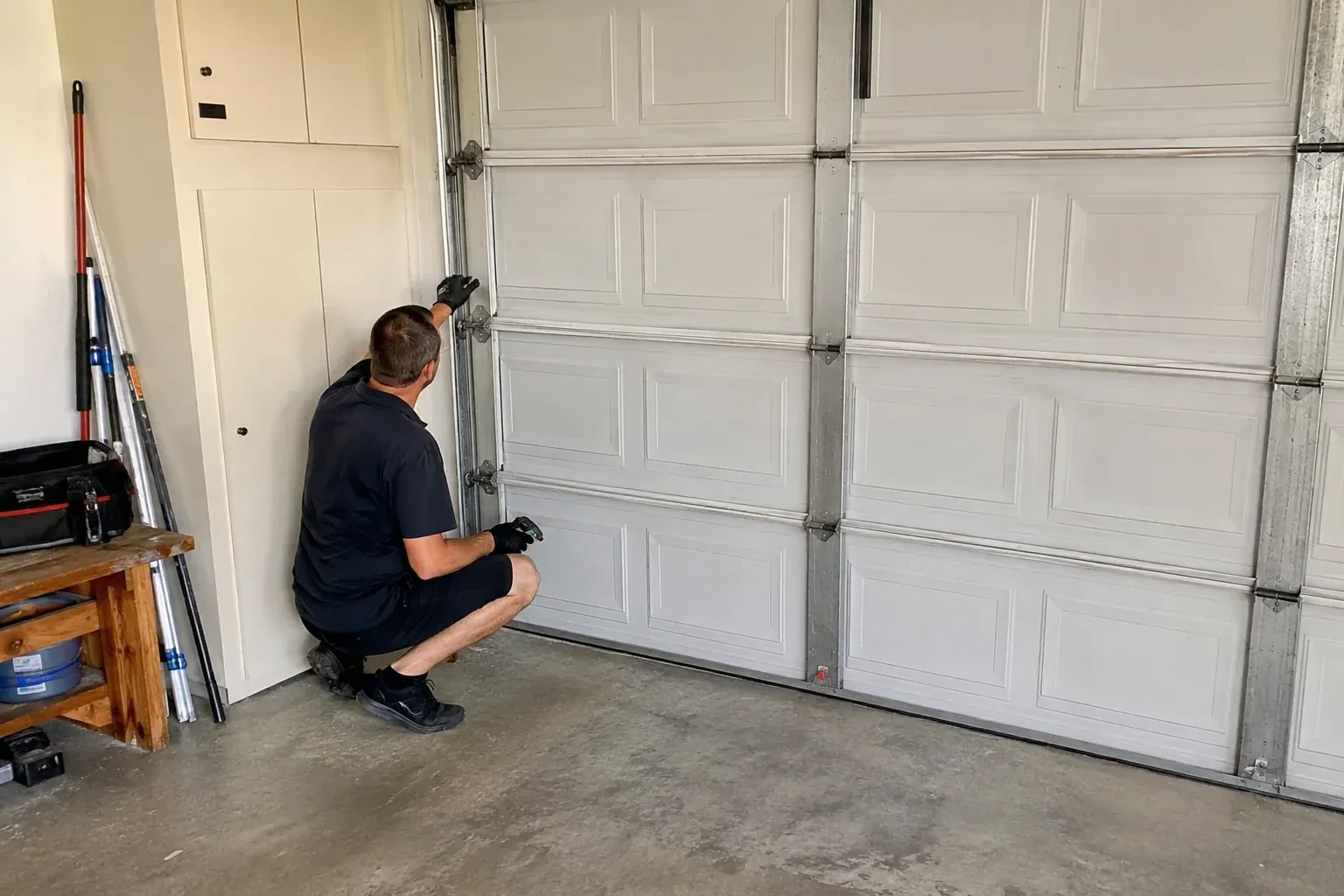
Before anything is measured, the technician stands back and runs the door through a full open and close, listening as much as watching. A healthy door sounds even from bottom to top; a knock at the turn into the horizontal track, a squeal at a particular hinge, a grinding drum or a motor that changes pitch under load each point somewhere specific. The eyes follow both bottom corners to see whether they leave the floor together, the top section as it passes the curve, and the final inch of closing, where the door should settle onto its seal without a thud. This one cycle often tells the technician where to spend the rest of the visit.
Fasteners, tracks and hinges with tools in hand
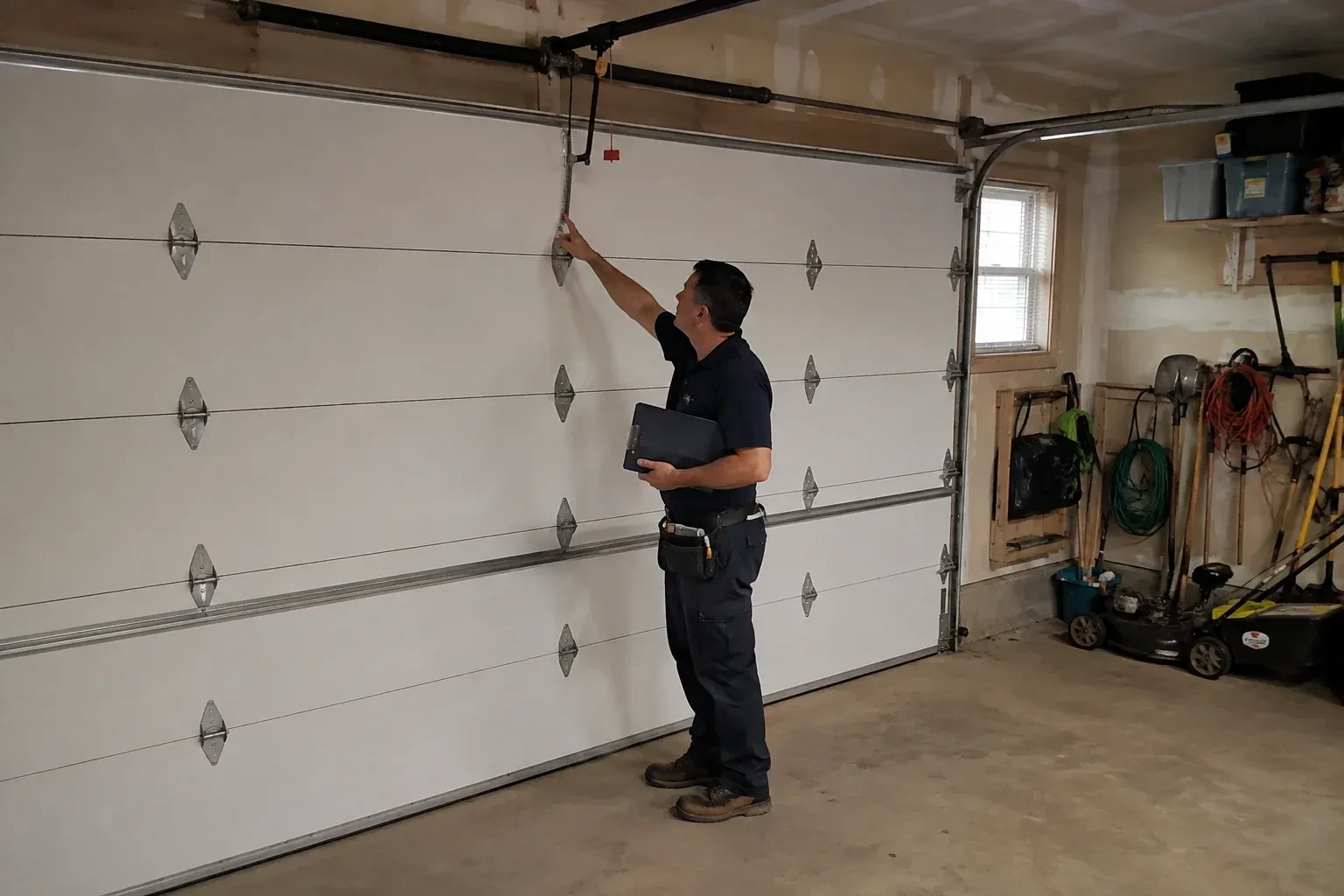
Once the door has been tested, the technician goes back along it with a socket set and a level. Every hinge bolt and track bracket is checked for tightness, and any that has backed out is snugged; the bottom roller brackets are left to the trained, system-specific handling their lift-cable tension calls for, not a routine snug. The vertical tracks are checked for plumb and the horizontals for level, with the door-to-track gap measured and any pinch or flare recorded. Hinges are numbered from the bottom up and a hinge in the wrong position, often left from an earlier repair, is noted. A stripped fastener or a bent bracket becomes a repair item rather than a tightening.
Three checks you can repeat each month
The inspection leaves you with a short routine. Once a month, with the door closed, pull the release cord and lift the door by hand; it should move easily and hold at waist height. Reconnect the opener, lay a flat board on the floor and send the door down; it should reverse when it touches. Then start it closing and wave a broom handle through the photo-eye beam; it should reverse before contact. Each of these takes under a minute and mirrors what the technician did. If any of the three behaves differently from the day of the inspection, that is the moment to call, while it is still a small job.
Garage Door Safety Inspection
In the van
- Remote and keypad batteries
- Silicone garage-door lubricant
- Replacement hinge and track fasteners
- Flat 2x4 test board
- Weatherstrip samples for matching
What affects the quote
Same fees day, night or weekend
1Opener type and age
A current opener with photo eyes, a keypad and several remotes has more devices to test than an older unit with contact reversal alone, and the test procedures differ by model.
2Manuals and unusual models
A door or opener with no label, a discontinued model or a custom lift setup means the test procedure has to be established rather than looked up, which adds time.
3High-lift, oversized or custom doors
Doors taller or wider than a standard residential opening, or with high-lift tracks and drums, have more to measure and take longer to observe through a cycle.
Garage Door Safety Inspection: questions
Will you tell me if the door should not be used?
Yes, plainly and at the door. A slack or frayed cable, a gap in a spring coil, a door hanging crooked, a bracket pulling out of the framing or an opener that fails the reversal test are the kinds of findings that put an item in the stop-use group. When that happens you see the reason yourself, the door is left resting in a safe spot with the opener unhooked, and the fix is written up and quoted so it can be booked.
How often should a garage door be inspected?
Once a year suits most households, and early spring, after the salt and freeze-thaw season, is a natural time. A door that opens many times a day, an older door, or one on a rental where nobody watches it closely does well with a look each season. Between visits, the monthly balance, reversal and photo-eye checks that industry guidance recommends catch most changes early.
My door is quite old. Is an inspection still worthwhile?
Yes, and often more so. Age alone does not say how much life is left in a spring or a roller, but condition does, and an inspection measures condition. Many older doors are sound and simply need a few worn parts and fresh lubricant. Where the report shows several items coming due at once, you can weigh planned repairs against a new door with real information rather than a guess.
Repair & Maintenance
- Off-Track Garage Door ResetThe door came down fine but with a scraping noise, and now the vertical track on one side is bowed…
- Garage Door Panel ReplacementA stray ball went through one of the window panes in the top section.
- Garage Door Bottom Seal ReplacementThe gap under the door is a finger wide at one end and nothing at the other.
Garage Door Safety Inspection near you
Households in Oshawa mostly need three things from us over the life of a door: a tune-up now and then, a spring or cable when one lets go, and a new opener or door when the old one is finished. Every one of those, plus the smaller jobs between, is covered below.