Repairs · Oshawa
Garage Door Manual Lock Repair
It is a February morning and the key goes only halfway into the garage handle. Yesterday's melt ran down the door face and into the keyway, and overnight it set like glass.
Garage Door Manual Lock Repair
In plain words
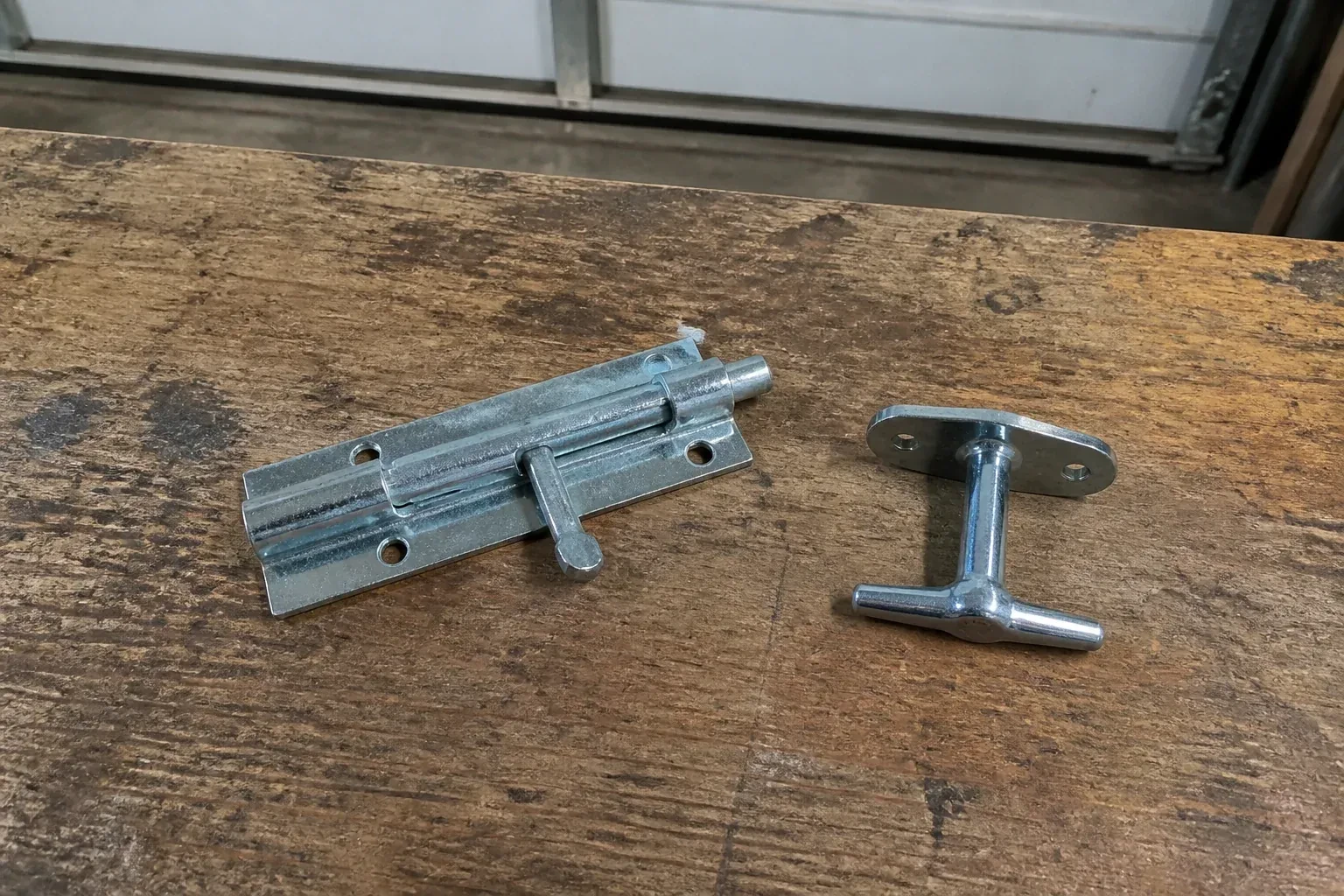
A sectional garage door is usually locked in one of two ways. An inside slide bolt on the door's edge shoots sideways into a slot cut in the vertical track. An outside keyed T-handle or L-handle turns a centre mechanism that throws a bar into each track, or on some models pulls a cable to release spring latches instead. Manual lock repair puts either arrangement back into service: the technician confirms the door closes fully and sits square, then frees, adjusts or replaces the bars, guides, lock body, handle or cylinder, and tests that the lock holds firmly and, just as important, clears the track completely when it is released.
How the visit goesYou pushed the slide bolt across like always, but tonight it stops short of the slot in the track and springs back. The door is down, the bottom seal is on the concrete, yet the bar and its hole are a finger's width apart.
Oshawa
How the visit goes
Following the bars to the tracks
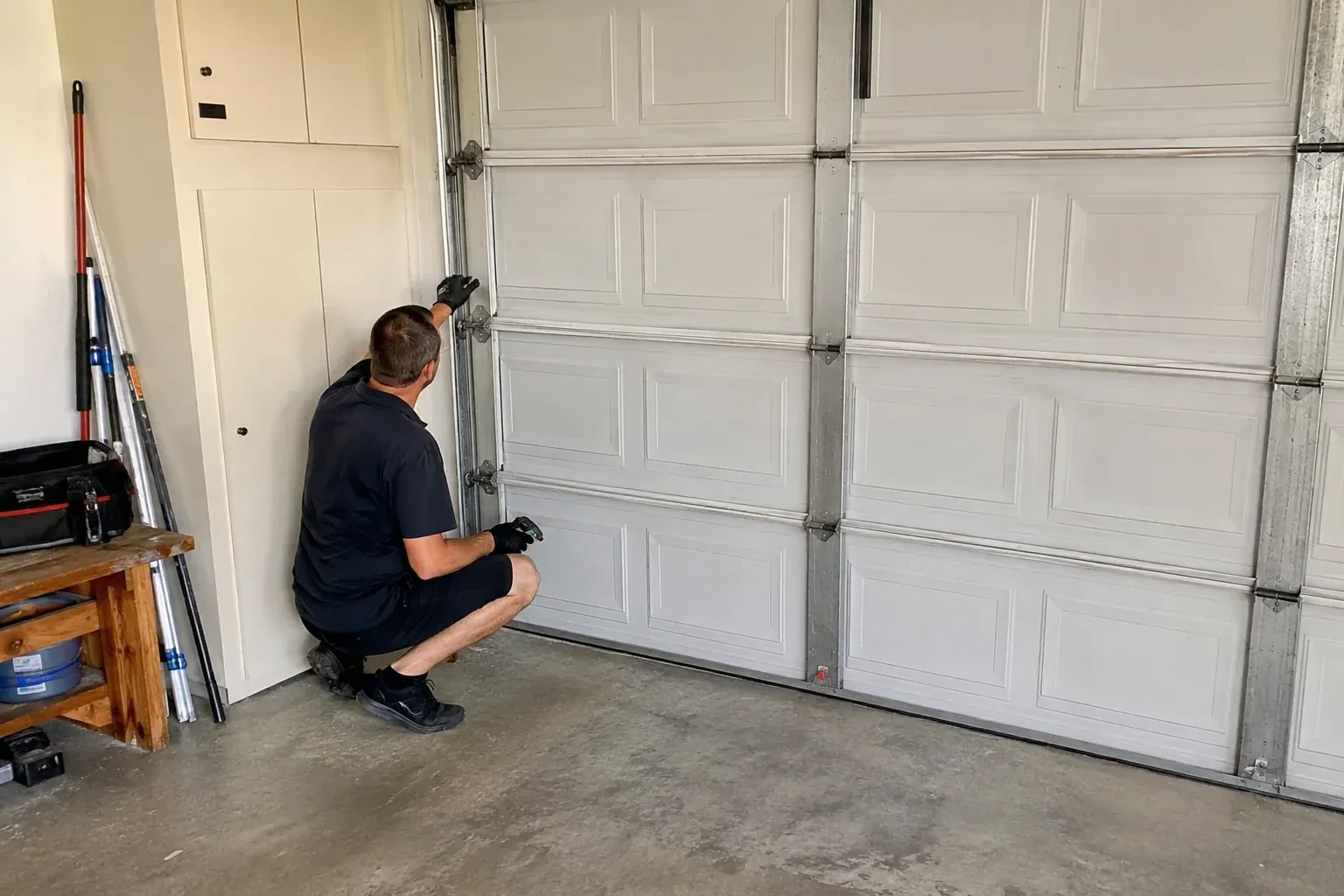
With the door shut, each bar is worked by hand while the technician watches its far end. It should travel smoothly through its guide, pass cleanly through the slot in the track, and come back the same way with no catching. A bar that binds points to rust in the guide or a guide that has been knocked out of line. A bar that reaches the track but not the slot points to alignment. A bar that is bent, kinked or hanging loose usually tells the story of an opener run against the lock. Both sides are checked even when only one is complained about, and the slots themselves are inspected for burrs, distortion and rust.
Fitting a new keyed handle set
When the outside handle is cracked, corroded through or of a pattern that no longer has parts, a complete T-handle set is fitted: exterior handle with cylinder, spindle, inside turn handle and the mounting hardware. The technician measures door thickness to choose spindle length and bolt length, and checks that the new handle's mounting holes match the existing cutout or dresses the opening to suit. On insulated doors a sleeve keeps the spindle centred through the foam. The set is tightened evenly so the handle turns without rubbing the door face, the cylinder is tested with its keys, and the connection to the bars is set so lock and release positions are definite.
One rule at the wall button
Where an opener shares the door, opener makers direct that the manual lock be removed or positively disabled rather than left in service on habit alone. The technician demonstrates the opener's own lock-out feature at the wall control and shows everyone who uses the garage how to tell at a glance whether the bars are in or out. Spring-loaded snap latches are left with their holding catch explained, since they lock on their own when the door closes. Most families settle into the routine after a few days, and the label is there for visitors, house-sitters and the one morning when someone is half asleep.
Garage Door Manual Lock Repair
In the van
- Inside turn handle and spindle
- Inside slide bolt or snap latch
- Key blanks and rekeying pins
- Keyed T-handle lock set
- Dry graphite or PTFE lubricant
What affects the quote
Same fees day, night or weekend
1Rekeying the lock to match your other doors
Some households want the garage's manual lock to turn with the same key as the house, rather than carrying a separate one. Matching a cylinder to an existing key, or cutting a fresh set for both, is arranged once the existing hardware has been looked at.
2Whether an opener shares the door
A powered door adds the coordination step: removing or disabling the bars, demonstrating the console lock-out, or installing an automatic deadbolt if you choose one. Each is priced as chosen.
3Corrosion and seized hardware
Screws rusted solid, a cylinder seized in its handle or bars welded into their guides take time to free or cut out, and corroded parts are replaced rather than reused.
Garage Door Manual Lock Repair: questions
Do you replace the whole handle or just the cylinder?
Whichever the fault calls for. A worn or broken cylinder in a handle that is otherwise sound is swapped or rekeyed on its own. A handle that is cracked, corroded through or of a pattern with no parts available is replaced as a set with its spindle and inside turn handle. The technician shows you what has failed before either route is taken.
How do I keep the slide bolt from rusting solid again?
Keep the bottom corner it lives in as dry as you can: push slush away from the inside edge of the door through winter and wipe salt off the bar and guide on a mild day. A light silicone film in late autumn sheds meltwater. Work the bolt once a month even if you do not use it, since a bar that moves regularly stays free. Any stiffness is worth a call while it is still a small job.
Does lock work involve the springs or cables?
The lock, its bars and its guides all live on the door sections and the tracks, well away from the counterbalance, so the visit involves no winding or unloading of springs. Where a lock misses its slot because the door hangs crooked or sits high, the door's balance or a cable may be part of the story, and the technician points that out so it can be dealt with properly.
Repair & Maintenance
Garage Door Manual Lock Repair near you
Households in Oshawa mostly need three things from us over the life of a door: a tune-up now and then, a spring or cable when one lets go, and a new opener or door when the old one is finished. Every one of those, plus the smaller jobs between, is covered below.